
- Most healthy Indian adults need about 0.83 g of protein per kg of body weight a day. If you
work out, it’s 1.2–2 g per kg. [1, 2]
- A normal Indian vegetarian day gives you roughly 30–50 g of protein. Okay for the basics,
not enough if you’re active.
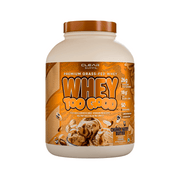
- One scoop of ClearSupps Whey Too Good gives you 26 g of protein for just 147 kcal, with 0 g
added sugar and all nine essential amino acids, ready in 30 seconds. [3]
- If you weigh 60 kg, that one scoop covers about half of your day’s protein need.
- Protein powder isn’t a steroid, it isn’t “heaty”, and it doesn’t harm healthy kidneys at the
recommended amounts.
The short answer
You need a protein supplement only if your meals aren’t giving you enough protein. And for a lot of us in India, they aren’t.
Our food is built around rice, roti and dal. It’s comforting and it fills you up, but on most days it adds up to just 30–50 g of protein. That might be enough if you’re not very active. But if you weigh 70 kg and go to the gym, you need somewhere between 84 and 140 g. [1, 2, 4] That’s a big gap.
This is where a supplement helps. One scoop of ClearSupps Whey Too Good gives you 26 g of protein with no added sugar. That’s almost half (48%) of what an adult man needs in a day. [1, 3, 5]
What does protein actually do in your body?
Think of protein as the bricks your body is built with. Your muscles are made of it, sure. But so are your hair and nails, the collagen that keeps your skin firm, the haemoglobin that carries oxygen in your blood, and the antibodies that fight off infections. Many of your enzymes and hormones are made of protein too.
Here’s the part most people don’t know. Your body is breaking down and rebuilding about 250–300 g of its own protein every single day. [6] A little gets lost along the way, so you have to keep topping it up with food. And unlike fat, your body can’t store extra protein for later. [1] So you need some every day.
When you don’t get enough for a while, your body tells you. You feel tired. You get hungry soon after eating. Your muscles take longer to recover after a workout. Your hair and nails start looking dull.
How much protein do you need for your weight?
Find your weight below. The second column is what you need on a normal day. The third is what you need if you work out regularly. The last column shows how much of your daily need one 26 g scoop takes care of.
| Your weight | Basic need (0.83 g/kg) | If you train (1.2–2 g/kg) | One 26 g scoop covers |
|---|---|---|---|
| 50 kg | 42 g | 60–100 g | 62% of basic need |
| 60 kg | 50 g | 72–120 g | 52% of basic need |
| 70 kg | 58 g | 84–140 g | 45% of basic need |
| 80 kg | 66 g | 96–160 g | 39% of basic need |
| 90 kg | 75 g | 108–180 g | 35% of basic need |
Sources: [1, 2, 4] Adults over 65 benefit from 1–1.2 g/kg. [7] If you’re pregnant or breastfeeding, your needs are higher, so please follow your doctor’s advice.
How much protein does a typical Indian day actually give you?
Let’s check. We took three very normal days of eating and worked out the protein using the Indian Food Composition Tables. [8] See which one looks like your day.
| Meal | South Indian veg day | North Indian veg day | Busy office day |
|---|---|---|---|
| Breakfast | 3 idlis, sambar, chutney: ~10 g | 2 aloo parathas, 1 katori curd: ~13 g | Tea and 2 biscuits: ~2 g |
| Lunch | Rice, sambar, rasam, poriyal, curd: ~14 g | 2 rotis, dal, sabzi, a little rice: ~18 g | Canteen meal (rice, dal, sabzi, 1 roti): ~13 g |
| Evening | Filter coffee and 2 biscuits: ~3 g | Chai and a samosa: ~4 g | Tea and a puff or vada pav: ~5 g |
| Dinner | 2 dosas with sambar: ~9 g | 2 rotis, rajma or chole: ~13 g | 2 rotis and sabzi, or noodles: ~8 g |
| Total | ~36 g | ~48 g | ~28 g |
Approximate values calculated from IFCT 2017 for typical home portions. Actual amounts vary with recipes and serving sizes.
Surprised? Most people are. Even a non-veg day, with an omelette for breakfast and chicken curry at lunch, usually comes to only about 55–60 g. That’s fine for the basics. But if you weigh 70 kg and train four days a week, you’re still at least 25 g short.
When I go through clients’ food diaries, the pattern I see most often is simple: breakfast and the evening snack have almost no protein, so the whole day depends on one katori of dal at lunch and dinner.
There’s one more thing. Rice and roti are low in one amino acid (lysine), and dal is low in another (methionine). So you need the right mix, and enough of it, to get complete protein. [9] Whey doesn’t have that problem. It already has all nine essential amino acids.
What does 26 g of protein look like in food?
Let’s be clear: food always comes first. But it’s useful to see what it actually takes to get the same 26 g of protein you get from one scoop of Whey Too Good.
| Food | Amount for ~26 g protein | Approx. calories |
|---|---|---|
| Whey Too Good | 1 scoop (39 g) | 147 kcal |
| Chicken breast, cooked | ~90 g | ~150 kcal |
| Soya chunks, dry | ~50 g | ~170 kcal |
| Eggs | 4 large | ~290 kcal |
| Paneer | ~130–140 g | ~350 kcal |
| Cooked dal | 3–4 katoris | ~450 kcal |
| Roasted chana | ~115 g | ~420 kcal |
| Toned milk | ~800 ml | ~470 kcal |
| Peanuts | ~100 g | ~570 kcal |
Approximate values from IFCT 2017 [8] and the Whey Too Good label. [3]
All of these are good foods. But imagine eating three or four katoris of dal just for protein, or cooking chicken at 7 am before work. If you want 26 g of protein without the extra calories or the cooking, a scoop is hard to beat.
What are the benefits of a protein supplement?
Does a protein shake help muscle recovery and growth?
Yes. Every workout causes tiny tears in your muscles. Protein repairs them, and that repair is what makes you stronger.
Your muscles need about 20 g of good protein in one go to get the full benefit after training, [10] plus about 2–3 g of an amino acid called leucine to kick-start the process. [2] One scoop of Whey Too Good gives you 26 g of protein and 2.7 g of leucine. So one scoop does the job. [3]
Can protein help with weight loss?
It can, in two simple ways. First, protein keeps you full longer, so that 5 pm namkeen craving gets a lot quieter.
Second, your body actually burns calories digesting protein. About 20–30% of protein calories are used up just in digestion. For carbs it’s 5–10%, and for fat it’s 0–3%. [11] And when you’re eating less to lose weight, enough protein helps you hold on to your muscle, so you lose more fat instead. [2]
Is it only for people who go to the gym?
Not at all. It’s for anyone whose meals fall short, and as you saw in the table, that’s a lot of us. Vegetarians, people who skip breakfast, and anyone over 40 often benefit the most.
That last group matters more than people think. After 30, we slowly lose about 3–8% of our muscle every ten years. [12] Enough protein, plus some strength training, helps you stay strong as you get older. If mornings are your weak spot, read our guide to whey protein for breakfast.
In my practice, the people I most often suggest a protein supplement to are working women who skip breakfast and vegetarian students living in hostels or PGs, because their meals are mostly rice, roti and snacks.
What do Indians commonly worry about with protein powder?
I hear these questions all the time, so let’s clear them up.
Is protein powder a steroid?
No. Whey comes from milk. It’s the watery part that separates when cheese is made, a lot like the liquid left behind when you make paneer at home. Whey Too Good is also Banned Substance Tested, so there’s nothing hidden in it.
Is protein powder “heaty”? Can I take it in summer?
The idea of “heaty” and “cooling” foods comes from tradition, not from nutrition science. Whey is just milk protein, and you can have it all year round. In summer, mix it with cold water and keep drinking enough fluids through the day.
Does protein damage the kidneys or cause stones?
If your kidneys are healthy, research hasn’t found any harm at the amounts recommended for active people. [2, 13] Kidney stones are linked more to not drinking enough water. But if you already have a kidney problem or have had stones before, please check with your doctor first.
Will women get bulky from protein powder?
No, this is one of the biggest myths. Building big muscles takes months of heavy training and a lot of extra food. Women also have much lower levels of the hormones that cause big muscle growth. One scoop is about the same protein as a good, protein-rich meal.
Can I mix whey with milk?
Of course. Whey is fine for vegetarians who have dairy. A glass of milk (200 ml) adds about 6–7 g more protein, but also more calories. If you’re watching your weight, water works just as well. [8]
How do you choose a good protein powder?
Walk into any store and every tub looks the same. Here’s what I’d check:
- Protein per scoop, not the scoop size. A bigger scoop doesn’t mean more protein, so check the
grams of protein on the label. Whey Too Good gives 26 g of protein in every 39 g scoop, which means two-thirds of each scoop (66.7%) is pure protein. [3]
- A full label. You should be able to see every ingredient and how much of it is in there.
- No added sugar. Your protein shake shouldn’t secretly be a sugar drink. Whey Too Good has 0 g
added sugar.
- Proper testing. Whey Too Good is Banned Substance Tested and Heavy Metals Tested. It’s made
in a US FDA, NSF, GMP and ISO certified facility and is FSSAI compliant.
- Easy on the stomach. Whey Too Good has 50 mg of DigeZyme®, a mix of five digestive enzymes,
including lactase, which helps with milk sugar. [14]
- A taste you’ll actually enjoy. If you dread it, you won’t stick with it. Whey Too Good comes in six
flavours, each with real pieces in it.
- A trusted seller. Fake supplements are a real problem in India. Buy from the brand’s own website
or a store you trust.
Want the full guide? Read How to Read a Supplement Label: A 5-Minute Guide.
How and when should you take it?
Keep it simple. Add one scoop to 200–250 ml of cold water or milk, shake it up, and you’re done.
You don’t have to rush to your shaker the minute your workout ends. Have it after training, with breakfast, between meals or even on rest days. What really matters is how much protein you get across the whole day.
Stick to the directions on the pack. Each scoop also gives you 8.5 mg of zinc and 150 mg of magnesium, so if you take a multivitamin, add those up. Our RDA Explained guide shows you how. [3]
If you’re lactose intolerant, read the full label and listen to your body. The lactase in DigeZyme® helps with digestion, but everyone’s tolerance is a little different.
Frequently asked questions
How much protein is in one scoop of Whey Too Good?
26 g in a 39 g scoop. That’s about 48% of an adult man’s daily need as per ICMR 2020, with 0 g added sugar and 147 kcal.
How much protein does an Indian vegetarian diet give?
Usually around 30–50 g a day with normal home meals. That can be enough for the basics, but it falls short if you exercise regularly.
Is whey protein vegetarian?
Yes. It comes from milk, so it’s fine if you have dairy. It isn’t vegan.
Do I need protein powder if I don’t go to the gym?
Only if your meals fall short. Lots of vegetarians, busy professionals and people over 40 have one scoop a day just to reach their daily target.
Can I take protein on rest days?
Yes. Your muscles keep repairing on rest days, so you still need the same amount of protein.
What is the best time to take whey protein?
Whenever it fits your day: after a workout, at breakfast or between meals. Your total protein for the day matters more than the timing.
The bottom line
Indian food is delicious and filling. But it’s built around rice and roti, and that usually leaves us short on protein, especially if we’re active. That’s not your fault. It’s just how our meals are made.
So check your weight in the table, look at what a normal day gives you, and you’ll know whether you need a supplement. If you do, one scoop of Whey Too Good gives you 26 g of protein, 0 g added sugar and 50 mg of DigeZyme®, in a shake you’ll actually look forward to. Try Whey Too Good.
References
- ICMR-National Institute of Nutrition. Nutrient Requirements for Indians: Recommended Dietary Allowances and Estimated Average Requirements. Hyderabad: ICMR-NIN; 2020.
- Jäger R, Kerksick CM, Campbell BI, et al. International Society of Sports Nutrition Position Stand: protein and exercise. J Int Soc Sports Nutr. 2017;14:20.
- ClearSupps Whey Too Good, Nutritional Information panel (product label). Iron Asylum India Pvt. Ltd.
- Thomas DT, Erdman KA, Burke LM. American College of Sports Medicine Joint Position Statement: Nutrition and Athletic Performance. Med Sci Sports Exerc. 2016;48(3):543–568.
- Food Safety and Standards Authority of India. Food Safety and Standards (Labelling and Display) Regulations, 2020.
- Waterlow JC. Protein turnover with special reference to man. Q J Exp Physiol. 1984;69(3):409–438.
- Bauer J, Biolo G, Cederholm T, et al. Evidence-based recommendations for optimal dietary protein intake in older people: a position paper from the PROT-AGE Study Group. J Am Med Dir Assoc. 2013;14(8):542–559.
- Longvah T, Ananthan R, Bhaskarachary K, Venkaiah K. Indian Food Composition Tables 2017. Hyderabad: ICMR- National Institute of Nutrition; 2017.
- ICMR-National Institute of Nutrition. Dietary Guidelines for Indians. Hyderabad: ICMR-NIN; 2024.
- Witard OC, Jackman SR, Breen L, et al. Myofibrillar muscle protein synthesis rates subsequent to a meal in response to increasing doses of whey protein at rest and after resistance exercise. Am J Clin Nutr. 2014;99(1):86–95.
- Westerterp KR. Diet induced thermogenesis. Nutr Metab (Lond). 2004;1(1):5.
- Volpi E, Nazemi R, Fujita S. Muscle tissue changes with aging. Curr Opin Clin Nutr Metab Care. 2004;7(4):405–410.
- Antonio J, Ellerbroek A, Silver T, et al. A high protein diet has no harmful effects: a one-year crossover study in resistance-trained males. J Nutr Metab. 2016;2016:9104792.
- Majeed M, Majeed S, Nagabhushanam K, et al. Evaluation of the safety and efficacy of a multienzyme complex in patients with functional dyspepsia: a randomized, double-blind, placebo-controlled study. J Med Food. 2018;21(11):1120–1128.